
 Français
 Español
 Deutsch
 Italiano
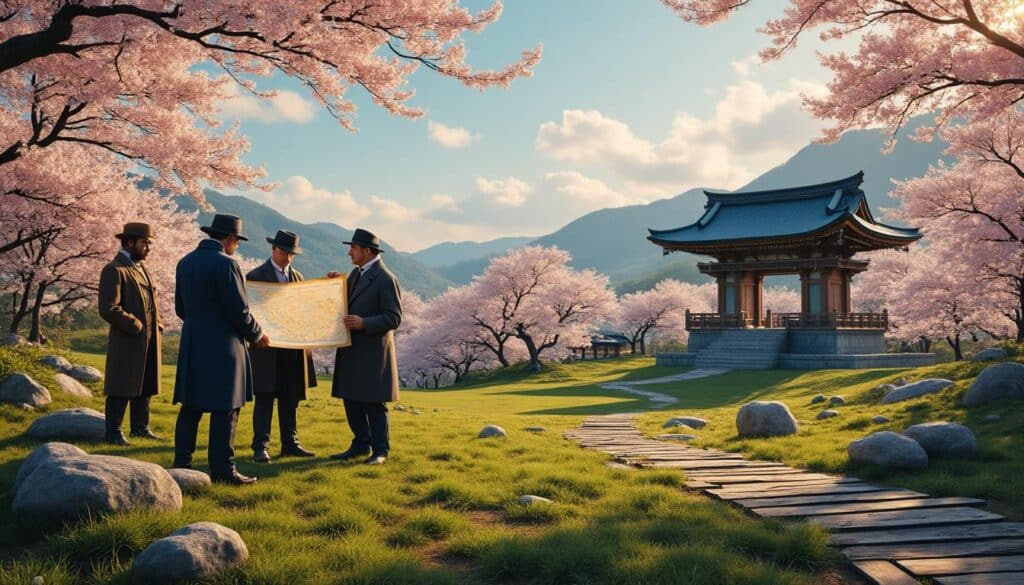
Ancient Beginnings: The Prehistoric Roots of Chiba
Chiba Prefecture, located on Japan’s eastern coast, boasts an ancient history that dates back to prehistoric times. As the earliest societies began to settle, Chiba’s fertile lands and rich marine resources from the Pacific Ocean and Tokyo Bay played a crucial role in their survival and development. The Jomon period, roughly from 10,500 BCE to 300 BCE, saw the first significant settlements in this area, with artifacts discovered that indicate early inhabitants thrived on abundant fishing and foraging opportunities.
The presence of large shell mounds, known as kaizuka, offers a fascinating glimpse into these ancient societies. These mounds, the largest in Japan, are essentially ancient waste dumps that provide important archaeological insights into the diet and lifestyle of prehistoric communities. Items found include shells, bones, pottery, and tools, which depict a community deeply connected to the sea and reliant on its bounty for sustenance.
As we transition into the Asuka period, beginning around 538 CE, important changes shaped Chiba’s administrative and cultural landscape. The Taika Reform of 654 divided the area into distinct provinces: Shimosa in the north and Kazusa in the south, while Awa emerged in 718 CE. This division was part of a broader initiative to centralize power across Japan, aligning with the nascent Heian court’s ambitions.
These provinces were crucial in establishing a stable political and economic framework that would foster Chiba’s growth over the centuries. The establishment of kokubunji, provincial temples, underlined the centralized authority’s emphasis on religion’s importance in governance. These temples became not only religious and cultural centers but also served as administrative hubs.
Today, these ancient sites remain important cultural landmarks and are frequently explored by historians and tourists seeking a deep dive into Chiba’s storied past. These sites are a testament to the enduring legacy of the region’s early inhabitants and highlight the depth of heritage found within Chiba’s borders.
Chiba’s Ascendance During the Heian Period
The Heian period (794–1185) marked a significant transformation for Chiba as shōen (feudal estates) were established, contributing considerably to the area’s growth. The fertile lands of Chiba became an economic engine, supplying agricultural products and tax revenue to the capital in Kyoto. This period saw the socio-political landscape shift as provincial governors, known as kokushi, began asserting military independence, leading to the rise of powerful local clans.
One such influential clan was the Chiba Clan, descendants of the Taira who controlled the Shimosa region. Around this time, the clan’s strategic governance sowed the seeds for their future dominance. A notable figure from this era, Soga no Umako, has left a lasting cultural imprint, influencing subsequent generations and legends in the local folklore.
Chiba’s landscape from this period features remarkable architectural remnants such as the Nihonbashi Chiba and the symbolic Chiba Castle. These structures provide a connection between Chiba’s medieval past and modern culture, serving as physical reminders of the area’s historical significance.
The Chiba Castle, reconstructed many times, remains a poignant reminder of the area’s turbulent yet rich history. It is a prominent fixture in the city’s skyline, offering a tangible link to Chiba’s past glory and illustrating the architectural sophistication and strategic importance of the era. Meanwhile, numerous Shinto shrines scattered across the region stand as testaments to the spiritual and cultural narratives that have shaped Chiba over the centuries.
Visitors to Chiba can explore these heritage sites, which are preserved to offer insights into the feudal era’s complexities. These sites also serve as popular destinations for cultural enthusiasts aiming to experience the essence of Japan’s historical narrative.
The Chiba Clan and Kamakura Shogunate
The medieval period marked Chiba’s emergence as a significant power center, largely credited to the influential Chiba Clan. Founded by Chiba Tsuneshige, the clan was integral to the establishment of the first samurai government under the Kamakura shogunate. The Chiba clan’s strategic alliances and martial prowess positioned them as pivotal players during this transformative era.
Discovering the Chiba Clan’s historical impact reveals a network of alliances and conflicts that shaped not only the region but also the direction of Japanese history. Chiba Tsunetane, a prominent clan leader, played a crucial role in aiding Minamoto no Yoritomo during the Genpei War, which ultimately led to the formation of the Kamakura shogunate in 1185.
| Period | Event | Impact on Chiba |
|---|---|---|
| 1180-1185 | Genpei War | Strengthened Chiba’s military alliances |
| 1185 | Kamakura Shogunate Establishment | Elevated Chiba’s political influence |
| Mid-12th Century | Chiba Clan’s Rise | Consolidated power in Shimosa Province |
Chiba Tsunetane’s loyal support to Minamoto no Yoritomo, who realized the vision of the samurai-led government, earned the Chiba Clan significant prestige and territorial expansion. This period of prosperity was marked by cultural and economic growth, with the clan controlling vast areas in present-day Chiba and Ibaraki Prefectures.
However, the clan’s power waned during the Muromachi period (1336–1573) and they eventually succumbed to the expansive forces of Toyotomi Hideyoshi. Despite these historical shifts, the descendants of the Chiba Clan remain an intrinsic part of the region’s heritage, contributing to Chiba Prefecture’s enduring cultural narrative.
The Meiji Restoration and Chiba’s Industrial Era
The onset of the Meiji Restoration in the late 19th century introduced rapid modernization across Japan, impacting Chiba significantly. The 1873 merger of Kisarazu and Inba Prefectures into Chiba Prefecture marked the dawn of a new age, as the region aligned itself with broader national reforms. This alignment facilitated advancements in infrastructure and industrial development, propelling Chiba into a modern economic powerhouse.
The devastating Great Kanto earthquake of 1923 served as a stark reminder of nature’s unpredictability, causing immense damage and challenging the region’s resilience. However, the ensuing reconstruction efforts breathed new life into the area, laying the groundwork for further economic development.
During the 20th century, Chiba emerged as an industrial hub, notably within the Tokyo-Yokohama metropolitan area. The Keiyo Industrial Zone became a focal point of production for petrochemicals, iron, and other essential goods, driving both local and global economic contributions.
| Industry | Key Products | Location |
|---|---|---|
| Petroleum | Fuel, Lubricants | Keiyo Industrial Zone |
| Chemicals | Pesticides, Plastics | Keiyo Industrial Zone |
| Agriculture | Rice, Vegetables | Inland Farms |
Chiba’s strategic location alongside Tokyo Bay and Narita Airport further amplifies its role as a commercial and cultural center, drawing visitors globally. This pivotal position continues to foster Chiba’s growth as a dynamic metropolitan area while retaining its historic charm.
21st Century Chiba: A Cultural and Economic Hub
In the contemporary era, Chiba stands as a vibrant conurbation, thriving as a cultural and economic hub within Japan. The region’s seamless blend of historical grandeur and modern innovations makes it a unique destination for both residents and travelers. Key landmarks such as the Chiba Marine Stadium and Chiba Port Tower are central to the area’s allure, offering dynamic spaces for cultural and recreational activities.
Chiba City continues to expand its cultural influence, with institutions like the Chiba Prefectural Museum highlighting the richness of local art and history. As home to several educational and research facilities, Chiba reinforces its standing in academic and scientific circles, contributing to Japan’s knowledge and innovation economy.
- 🏟️ Chiba Marine Stadium: A central venue for sports and entertainment.
- 🌆 Chiba Port Tower: Offers panoramic views of the city and Tokyo Bay.
- 🏛️ Cultural Spaces: Museums and theaters enrich the cultural landscape.
Additionally, Chiba’s vibrant lifestyle is showcased through its festivals, arts, and theater, complementing its rich natural beauty. Parks and green spaces offer urban escapes, making it a desirable place to live and visit. Chiba’s cultural calendar brims with events, ensuring its ongoing prominence as a cultural beacon in Japan.
What is Chiba Prefecture known for?
Chiba is renowned for its rich history, modern industrial zones, cultural sites, and major transportation hubs like Narita Airport.
How did Chiba Prefecture form?
Chiba Prefecture was created in 1873 by merging Kisarazu and Inba Prefectures during the Meiji Restoration.
What cultural sites can one visit in Chiba?
Visitors can explore Chiba Castle, various Shinto shrines, and the Chiba Prefectural Museum, alongside modern attractions like the Chiba Marine Stadium.
Does Chiba observe daylight savings time?
Understanding Timekeeping Practices in Chiba, Japan Chiba, a vibrant city located close to Tokyo, follows Japan Standard Time (JST), remaining consistently at UTC+9 throughout the year. Unlike many Western countries, Japan, including Chiba, does not observe Daylight Saving Time (DST).…
Palm Trees in Chiba: A Tropical Impression in a Japanese Prefecture Visitors to Chiba Prefecture might be surprised to discover the presence of palm trees lining certain streets and areas, injecting a tropical atmosphere into this diverse region of Japan.…
How long has Chiba been a city?
Chiba, a vibrant city located just east of Tokyo, has a rich history that dates back centuries. Known for its strategic location and significant contributions to Japan’s economic and cultural landscape, Chiba holds a unique place in Japan’s array of…
What was the former name of Chiba?
Exploring the transformation of Chiba over centuries is like delving into a rich tapestry of history, showcasing a journey from its archaic origins to its modern incarnation. Known today as Chiba City, nestled on Japan’s eastern Kanto region and adjacent…
Chiba Prefecture, nestled conveniently east of Tokyo, is a destination renowned for its blend of urban sophistication, nostalgic history, lush landscapes, and proximal coastlines. While it stands as an undeniable gem in Japanese tourism, the question arises: is Chiba overrated?…

Are there skyscrapers in Chiba?
With its mesmerizing blend of modern and traditional architecture, Japan has always been at the forefront of architectural innovation. When one thinks of Japanese cities, Tokyo often springs to mind with its iconic skyline filled with towering buildings. However, another…
